Nottingham sits atop more than 1,000 man-made caves, forming the largest network of its kind in the United Kingdom. Carved into the city's soft sandstone bedrock over many centuries, these subterranean spaces have served as tanneries, air-raid shelters, and even the setting for a medieval coup.
The Scale of the Network
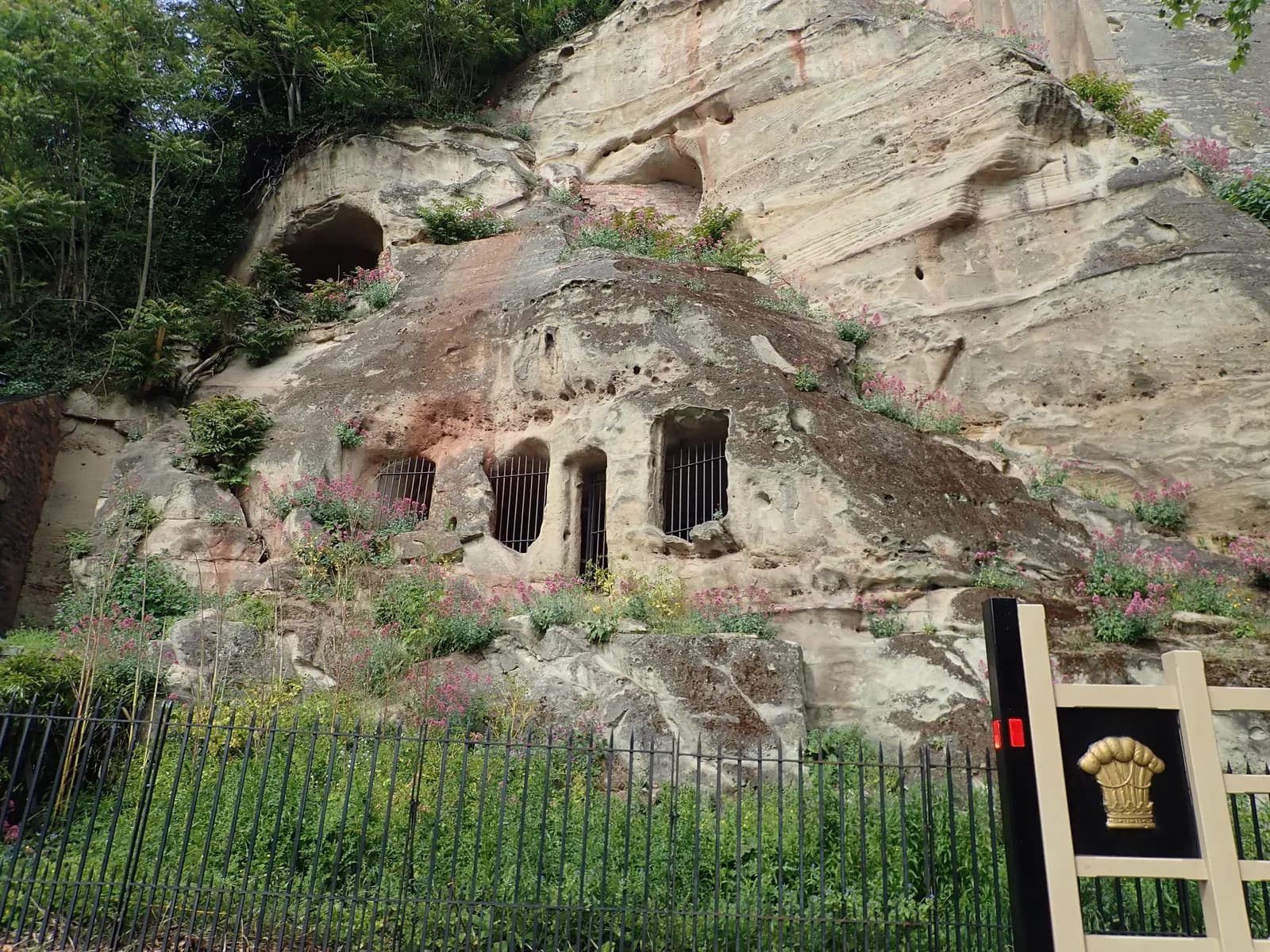
Nottingham's caves are not natural formations; they were cut by hand into the Triassic sandstone that lies beneath the city. The National Justice Museum, which manages the City of Caves visitor attraction, states that more than 1,000 individual caves lie hidden beneath Nottingham's streets. This makes the network the largest of its kind anywhere in Britain. The soft, workable stone made excavation relatively straightforward, and generations of Nottingham residents carved out cellars, storage spaces, and tunnels for a wide variety of uses.
Medieval Industry and Wartime Shelter
The caves have served many purposes across the centuries. Among the most notable is a medieval tannery, which the National Justice Museum describes as the only known example of its kind in the United Kingdom. Visitors to the City of Caves can also see remnants of the Victorian slums that once lined Drury Hill, preserved within the underground complex. During the Second World War, sections of the network were converted into air-raid shelters to protect local residents from enemy bombing. These layered histories reveal how Nottingham's underground spaces adapted to the changing needs of the city above.
Mortimer's Hole and the Castle Tunnels
Nottingham Castle sits atop Castle Rock, and the sandstone beneath it is riddled with rock-cut cellars and medieval pointed arches. The most famous of these passages is Mortimer's Hole, a long tunnel that descends from the castle to the foot of the rock. In 1330, William Montagu and a group of companions used this secret route to enter the castle and overpower Roger Mortimer, who had been ruling England alongside Queen Mother Isabella. Mortimer was arrested and led back out through the same tunnel. A metrical chronicle from around 1331 contains an interpolation suggesting the caves beneath the castle were carved by Lancelot to hide Guinevere; scholars regard this as the earliest known reference to their adultery.
Exploring the City of Caves Today
The City of Caves attraction, managed by the National Justice Museum, offers guided access to the largest publicly available section of Nottingham's underground network. The site provides educational programmes suitable for all ages, including Key Stage 1 and Key Stage 2 school groups. Guided tours of Nottingham Castle also include passages through Mortimer's Hole, allowing visitors to walk the same route used in the fourteenth-century coup. Together, these attractions preserve a subterranean heritage that remains one of Nottingham's most distinctive features.