Standing sentinel above the city on its sandstone outcrop, Nottingham Castle embodies nearly a thousand years of English history. The site has witnessed royal sieges, parliamentary rebellions, architectural reinvention and, most recently, a turbulent transformation into a 21st-century cultural destination.
Norman Origins and Royal Power
William the Conqueror founded the first castle here in 1068, just two years after the Norman Conquest. This wooden motte-and-bailey fortification was soon replaced by a stone fortress during Henry II's reign, establishing the castle as a key royal residence and military stronghold. The complex grew to comprise an upper bailey, middle bailey housing royal apartments, and a substantial outer bailey.
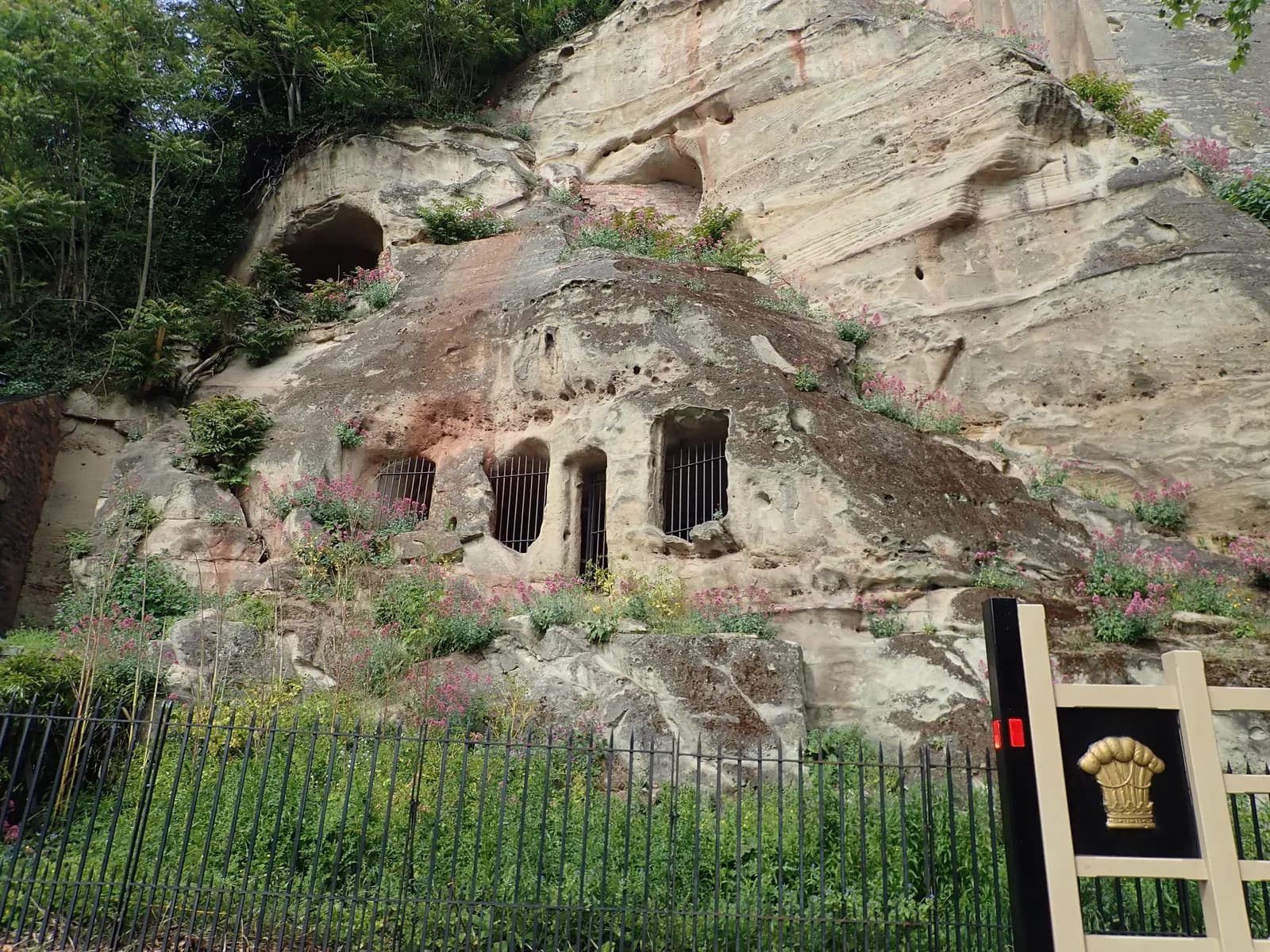
The castle secured its place in medieval history on 19 October 1330, when the teenage Edward III staged a daring coup. Using a secret tunnel now known as Mortimer's Hole, he and his companions entered the castle to arrest Roger Mortimer and his mother, Isabella of France. Mortimer, who had effectively ruled England through the young king, was later executed. Visitors can still descend into these medieval caves today on guided tours that follow the same route Edward's party took.
Royal connections continued through the centuries. Edward III held parliaments here; Richard II hosted councils; and Henry IV gifted the castle to his queen, Joan of Navarre, in 1403. The site's strategic importance was demonstrated again during the English Civil War, when Charles I raised his standard at the castle on 22 August 1642. Parliamentarian forces held the site throughout the conflict, but in 1651, following the royalist defeat, the medieval fortress was razed to prevent further military use. Only the gatehouse and partial ramparts survived the destruction.
The Ducal Palace Era
The castle remained in ruins until the 1670s, when William Cavendish, 1st Duke of Newcastle, commissioned a new structure on the site. Completed by his son in 1678, the building became one of England's finest examples of Stuart Restoration architecture. Mason Samuel Marsh designed an Italianate palace, drawing inspiration from Rubens' Palazzi di Genova, creating a residence quite unlike the military fortress it replaced.
This elegant chapter ended abruptly in 1831, when rioters protesting the 4th Duke of Newcastle's opposition to the Reform Bill burned the palace to the ground. The building remained a ruin for 45 years until architect Thomas Chambers Hine undertook its renovation between 1875 and 1878. The Prince of Wales, later Edward VII, opened the building as Nottingham Castle Museum: the first municipal art gallery in the United Kingdom outside London. The structure has held Grade I listed status since 1952.
The 2021 Redevelopment and Its Aftermath
After a £30 million redevelopment that closed the site for three years, Nottingham Castle reopened on 21 June 2021 under the management of the independent Nottingham Castle Trust. The transformation introduced contemporary galleries alongside historical exhibitions, with new spaces dedicated to Nottingham's industrial heritage and the Robin Hood legend.
The reopening was short-lived. On 21 November 2022, the Trust went into liquidation owing Nottingham City Council £2.68 million. All staff were made redundant and the castle closed once more. The council moved swiftly to resume operations, and on 26 June 2023, the castle reopened under direct municipal management.
Current Collections and Visitor Experience
Today's castle offers a layered experience that spans its entire history. The Long Gallery houses fine art collections including watercolours by Richard Parkes Bonington, works by Dame Laura Knight and L.S. Lowry, and the Joseph Collection of Wedgwood Jasperware. The Nottingham Lace Gallery celebrates the city's industrial heritage, while the Early Craft Gallery displays 15th-century Nottingham alabaster carvings and salt-glaze pottery.
The Rebellion Gallery offers an interactive exploration of protest history, and Robin Hood Adventures provides immersive games for younger visitors. The Museum of the Mercian Regiment occupies dedicated space, whilst Brewhouse Yard, connected to the castle by Mortimer's Hole, operates as a satellite museum.
For those seeking deeper historical immersion, daily cave tours explore the medieval tunnels including Mortimer's Hole and King David's Dungeon. These tours require separate booking at £9 per person in addition to admission.
Practical Information
Nottingham Castle stands on Lenton Road, Nottingham NG1 6EL. Opening hours vary seasonally: from February through October, the castle opens from 10am to 5pm with last entry at 4pm; from November through January, hours reduce to 11am to 4pm with last entry at 3pm.
Adult admission is £18 plus booking fee, though the ticket remains valid for 12 months. Children aged 15 and under enter free (up to three per paying adult). The council also offers a Rover Pass at £39 for adults, covering entry to Nottingham Castle, Wollaton Hall and Newstead Abbey, with children again admitted without charge.
No public parking is available on site, though limited accessible spaces can be arranged in advance. Visitors should consult the castle's website or contact nottingham.castle@nottinghamcity.gov.uk for current exhibition listings and booking details.